
Heating & Furnace Repair in McKinney, TX
Heating repair in McKinney might mean a decades-old furnace near the square or a new heat pump in Trinity Falls, and we work on both.
Older homes, older furnaces
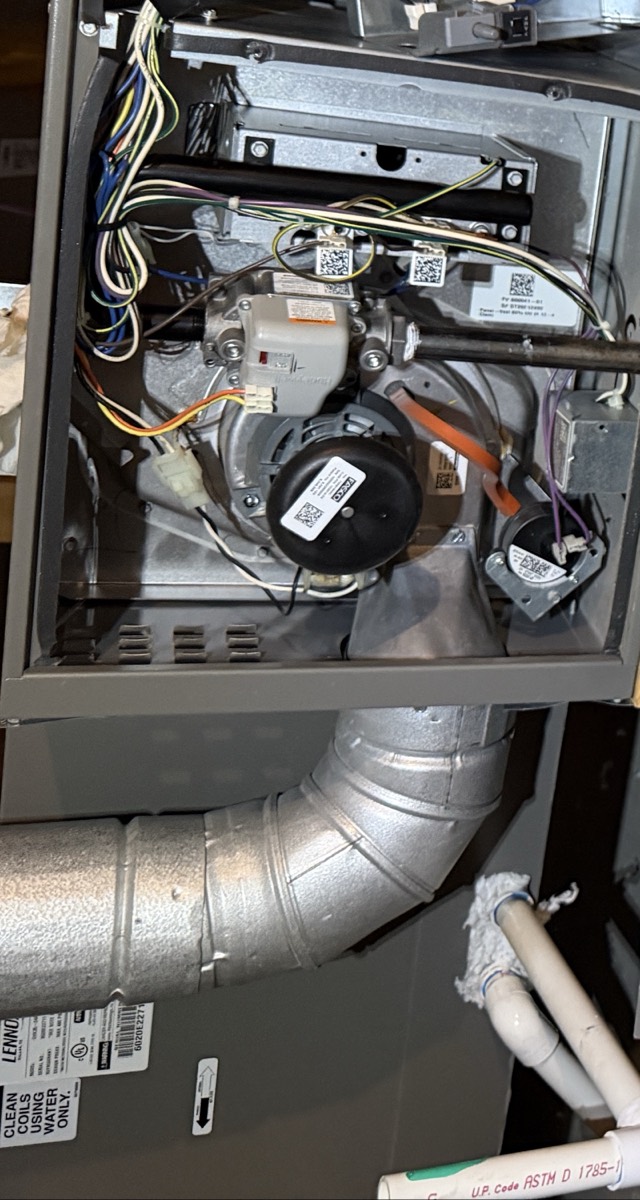
McKinney has a real stock of older houses, especially around the historic downtown square. Many of them have had their heating changed over several times through the years. We find furnaces in closets, attics and under-stair spaces, flues that were rerouted during a remodel, and ductwork patched together from different eras.
That history matters for furnace repair. Every fuel-burning furnace we work on in these homes gets a carbon monoxide test and a heat exchanger check. An older furnace that lights fine can still have a cracked heat exchanger or a flue problem, and you need to know about it.
Gas service and safety
Natural gas in McKinney comes from Atmos Energy or CoServ Gas, depending on where you live. We work on natural gas and propane furnaces alike, and every fuel-burning unit gets a carbon monoxide test before we leave.
If you smell gas, leave right away. Don't flip switches or use anything that could spark. Once you're a safe distance away, call 911 and your gas company, then call us once they say it's safe, and we'll come find the cause.
What happens on a McKinney heater repair visit
You tell us what you heard, smelled or saw. We find the cause, then tell you what failed and the price before any work starts. After the repair we make sure the furnace lights, holds a flame and shuts down the way it should. The repair carries a warranty, and we leave the area around your furnace as clean as we found it.
A few things you can check first: the thermostat is set to heat with fresh batteries, the filter isn't clogged, and the power switch near the furnace is on. If the furnace tries to start, fails, and tries again over and over, turn it off and call. Repeated restarts put wear on the igniter and the controls.
Heat pumps in north McKinney
Many of the newer homes in Painted Tree, Trinity Falls, Aster Park and Eliana use heat pumps with an electric heat kit for backup. Heat pump repair on those systems usually comes down to the defrost cycle, a sensor, the reversing valve, or a thermostat that isn't set up for the equipment. Backup heat matters here too, since electric heat strips that run all the time are an easy way to get a shocking power bill.
Some ice on the outdoor coil during a cold, damp morning is normal, and the unit should melt it off in a defrost cycle. A coil that stays caked in ice for hours is not normal. Turn the system to emergency heat and give us a call.
A defrost cycle can look alarming the first time you see it. The outdoor fan stops, the unit makes a whoosh, and a cloud of steam rises off the coil for a few minutes. Inside, the electric heat kit runs briefly so the vents don't blow cool air. That is all normal.
The words on the thermostat matter too. "Aux heat" means the heat kit is helping the heat pump, which is expected during defrost and on the coldest mornings. "Emergency heat" turns the heat pump off and runs only the heat kit. Use it when the outdoor unit has a problem, then switch back once it's fixed so the heat kit isn't carrying the whole house.
Repair or replace a McKinney furnace from the 1990s or 2000s
Between the historic square and the new streets north of University Drive sits most of McKinney: houses from the 1990s and 2000s in established areas like Stonebridge Ranch and its gated Emerald Heights section. Many of them still run an early furnace, and those units are now old enough that the big question comes up on almost every repair.
Some failures are routine at that age and worth fixing: an igniter, a flame sensor, a pressure switch, a blower capacitor or an inducer motor. Those repairs can give a furnace several more winters. Other problems point the other way. A cracked heat exchanger is the clearest one, because it's a safety issue, not just a comfort issue. A failed control board or blower motor on a furnace that has already had several repairs is another sign that it may be time.
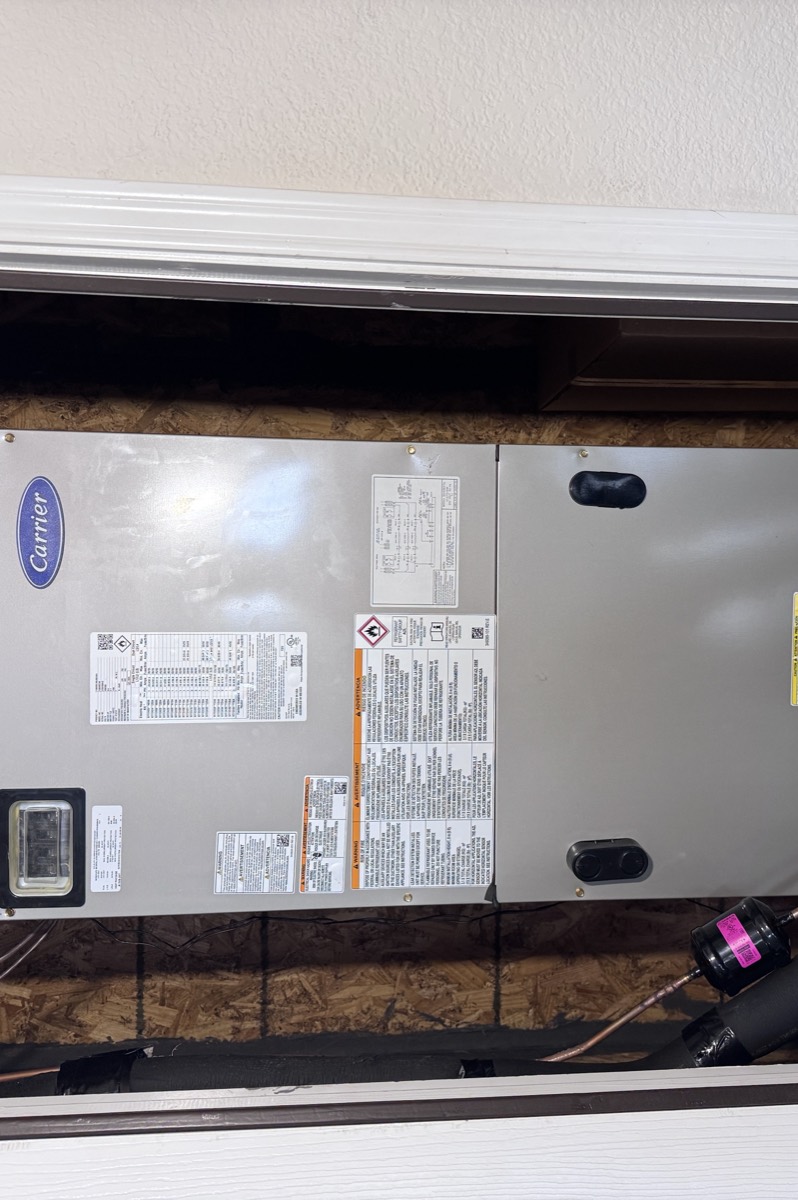
There's also the air conditioner to think about. In most homes the furnace and the AC share the same blower and indoor coil. If both are original, replacing them together often makes more sense than doing one now and the other a summer later. The new pieces are matched, and the house goes through one installation instead of two.
A few questions help you decide. Is the house heating evenly? Has the furnace needed a repair every winter lately? Are you planning to stay for years or sell soon? We lay out the furnace repair and the furnace replacement side by side, with the price of each, and you choose.
If you go with a new furnace, a straightforward swap usually takes about a day. We remove the old unit, set the new one, connect the gas line and venting, start it up, run a carbon monoxide test and make sure warm air reaches every room before we leave. In older McKinney homes, a high-efficiency furnace vents differently than the one it replaces, so the venting is planned as part of the job.
When a furnace is old and the repair is large, we put both choices: the repair, and a furnace replacement. In an older McKinney home, a replacement is also the time to fix venting, return air and duct problems that have been there for years. We handle furnace installation with Trane, Carrier, Lennox, Bryant, American Standard and other major brands, and financing is available.
A fall furnace tune-up through our Comfort Club plan keeps any furnace, old or new, in better shape for winter.
In north McKinney's all-electric homes, heat pump installation with a matched electric heat kit is the usual replacement, and we lay it out next to the repair.
Maintenance for McKinney furnaces, old houses and new
A heating tune-up in McKinney can look very different from one street to the next. In a house near the historic square, it may mean a furnace in a closet with a flue that was moved during a remodel. In Painted Tree or Trinity Falls, it's more likely a heat pump only a few years old.
For a gas or propane furnace tune-up, we clean the burners and flame sensor, test the igniter, follow the venting from the furnace to the roof, test the blower and check the filter. The heat exchanger gets a close look and the house gets a carbon monoxide test. Heat pump maintenance covers the defrost board, reversing valve, outdoor coil and electric heat kit.
October is the month to book it, ahead of the first blue norther. Comfort Club members don't have to call. We schedule the visit and remind you.
Upstairs, downstairs and the thermostat on the wall
Heat rises, so in a two-story house the upstairs often runs warm on a winter night while the living room and the bedroom over the garage stay cool. A few simple things help before anyone talks about new equipment:
- Keep supply vents open in every room. Closing vents in unused rooms raises pressure in the ducts and makes the system work harder without saving much.
- Keep return grilles clear of furniture, rugs and boxes.
- Try running the fan on "on" instead of "auto" for a few days to see whether mixing the air evens things out.
When the gap stays wide, zoning is one answer. A zoned system uses motorized dampers in the ducts and a thermostat on each floor, so one system can send more heat downstairs and less upstairs. In homes with two systems, the fix may be as simple as setting each thermostat for the floor it actually serves. A cold room over the garage, common in Craig Ranch and Stonebridge Ranch houses, usually needs attention to its duct run more than a bigger furnace.
Thermostat settings make more difference than most people expect. With a gas or propane furnace, turning the temperature down a few degrees at night is fine, and the furnace brings the house back up quickly. With a heat pump, deep setbacks can backfire. Raise the temperature several degrees on a cold morning and many thermostats call for the electric heat kit to close the gap fast, which is the costly way to warm a house. Small, steady changes work better.
Smart thermostats work well with either kind of equipment, as long as they are wired and set up for the system they control. One set up for a furnace but connected to a heat pump, or one missing a common wire, can cause short cycling, a blank screen or backup heat that comes on when it shouldn't. If you put in a new thermostat and the heating started acting up that same week, tell us when you call.
Short cycling means the heat starts, runs a few minutes, shuts off and starts again. A clogged filter, a thermostat in a poor spot such as near a supply vent or in direct sun, equipment too large for the house, or a safety switch that keeps tripping can all cause it. It wears out parts and leaves rooms uneven, so it's worth a call even when the house feels warm enough.
Filters are the easiest part to stay on top of. The size is printed on the edge of the one in your system, for example 16x25x1 or 20x25x4. Take a picture of it so you buy the right one. One-inch filters usually need changing every month or two while the heat runs daily, and thicker media filters last longer. Pets, a remodel or dust from nearby construction mean more frequent changes. A filter that doesn't fit leaves gaps that let dust into the blower.
Once the heat runs every day, indoor air gets dry. Static shocks, dry skin, scratchy throats and small gaps in wood floors and trim are the usual signs. A clean portable humidifier in the bedrooms helps, and sealing drafts around exterior doors and the attic hatch keeps dry outdoor air from leaking in. If windows start to fog on the inside, turn the humidifier down.
How scheduling works for McKinney calls
McKinney is a big city, and it sits on both sides of US 75. We schedule visits across all of it: the west side around Stonebridge Ranch, Craig Ranch and Highland Lakes, the north side near Eliana, Aster Park and Painted Tree, and the homes east of US 75 and around the downtown square. Tune-ups and installs are booked on a day that suits you.
When you call, we ask for your address, what the system is doing, and whether you have a gas furnace or a heat pump. Then we give you an honest arrival time on the phone, one we can actually keep. If the first cold front of the season hits and the phones get busy, we tell you that up front instead of promising a time we can't make.
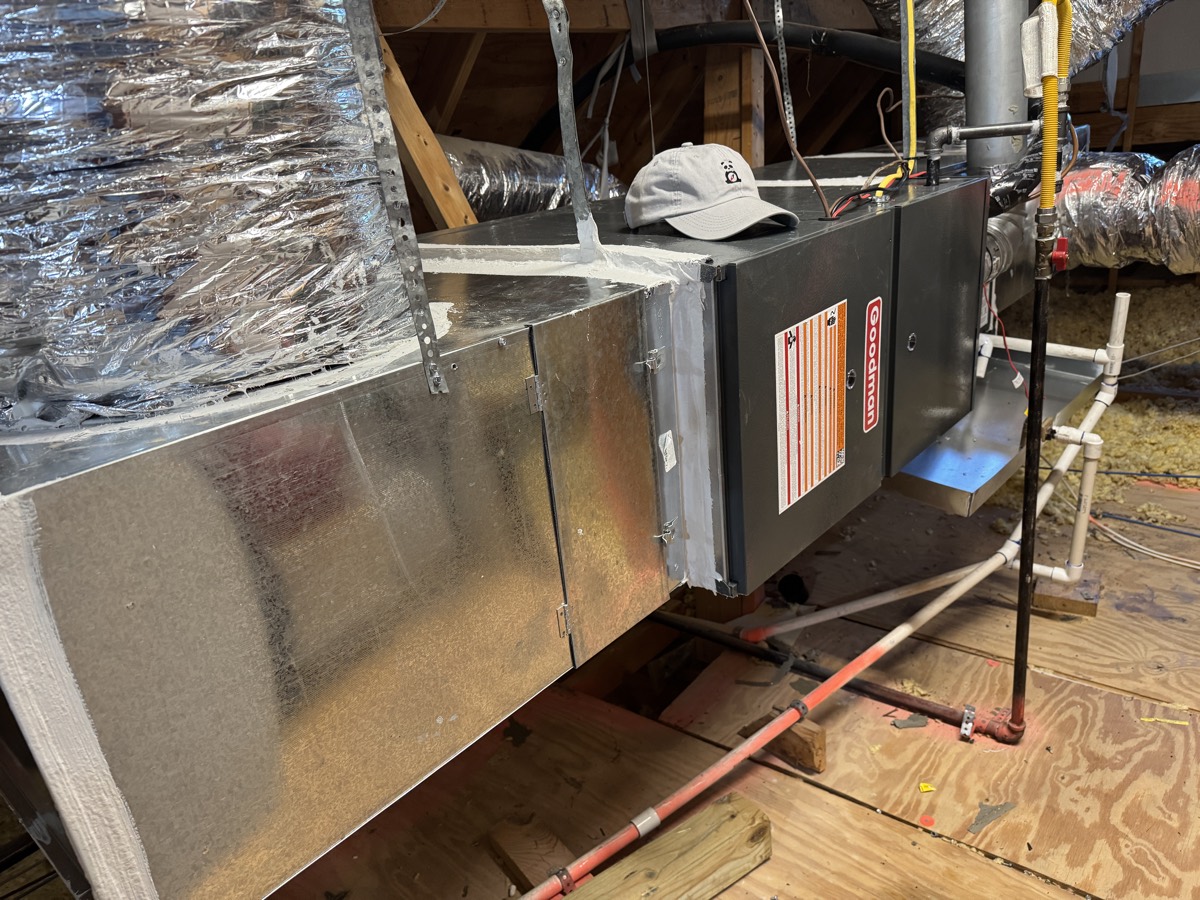
A few things help us move faster: calling early in the day, making sure someone is home who can let us in and show us where the equipment is, and clearing a path to the furnace closet or attic access. If your furnace is in the attic, a working light and a clear spot under the ladder save time.
If you have more than one system, tell us which one is out and where it sits. Many two-story homes in McKinney have one furnace in a downstairs closet and another in the attic, and knowing that ahead of time means the technician shows up with the right ladder and parts.
No heat on a freezing night is an emergency, and we treat it as one. Our line is answered 24/7, and we work after hours when a family is without heat.
Keeping the house warm while you wait
If the heat is out on a cold night, close the curtains, shut the doors to rooms nobody is using, and keep the family together in one or two rooms. Older McKinney homes near the square lose heat quickly through tall windows, so heavy curtains help. Never warm the house with the oven, a grill or a camp heater. If you run a space heater, keep it clear of bedding and curtains.
Book heating service in McKinney
Emergency line answered 24/7.
- HoursMon–Sat 8:00 AM – 5:00 PM · 24/7 emergency service
Heating in McKinney: what we handle
- Furnace Repair
- Emergency Heating Repair
- Heat Pump Repair
- Furnace Installation
- Heat Pump Installation
- Furnace Tune-Up
Licensed and insured Texas HVAC contractor. Trained, certified technicians. Warranty on repairs. Financing available. Comfort Club maintenance plans.
What our customers say
Real Google reviews. Read them all on our reviews page, or on Google.
“I called Panda Heating and Cooling because a couple other times companies were not able to fix the problem. … Panda Heating and Cooling came in and fixed my problem in less than 5 minutes. The HVAC Professional was respectful and courteous as well as informative.”
“Tech got my furnace fixed in record time. I’m glad we don’t have to spend another night without heat. Great service, reasonable price.”
“… Jason was friendly, professional, and definitely knew what he was doing. Had my furnace back up and running in no time. Highly recommend Panda to anyone who needs service or installation.”
Questions about heating in McKinney
What should I do if my carbon monoxide alarm goes off in McKinney?
Get everyone outside to fresh air and call 911. Stay out until the fire department says it's clear, then call us and we'll come to your McKinney home to find the cause.
My house near downtown McKinney has an old furnace. Can you work on it?
Yes. We repair older furnaces, check the venting and heat exchanger, and test for carbon monoxide on every gas or propane unit.
Why is my heat pump running on backup heat all the time?
It's usually a defrost, sensor, refrigerant or thermostat setup problem. We find which one it is and tell you the price before any work starts.
What do the different furnace noises mean?
A squeal often points to the blower motor or a belt. A loud bang or boom when the burners light is a sign the gas is lighting late, so turn the furnace off and call. Rattling usually means a loose panel, screw or piece of ductwork. A hum with no air coming out can be a motor or capacitor. Clicking over and over without the burners lighting means the furnace is trying to start and can't. Any new noise is worth mentioning when you call.
What are the signs a heat exchanger needs checking?
Watch for soot or scorch marks around the burners or on the furnace cabinet, a burner flame that flickers or changes when the blower starts, rust or water inside the cabinet, and a carbon monoxide alarm. Headaches or nausea that ease when your family leaves the house are another warning. If the CO alarm sounds or anyone feels ill, get everyone outside, call 911 first, then call us once the fire department says it's clear.
What happens when you replace a furnace?
We size the new furnace for your house instead of just copying what was there. Because the furnace and air conditioner share an indoor coil, we make sure the coil matches the outdoor unit. We look over the ducts and return air, set the new equipment, start it up, run a carbon monoxide test on gas and propane units, and walk you through the thermostat. The old furnace goes with us, and the closet or attic gets cleaned up before we leave.
Who registers the warranty on a new furnace or heat pump?
We do. When we install your new heating equipment, we register the manufacturer's parts warranty for you, so you don't have to remember a deadline. Our labor warranty is written on your estimate, so you know what it covers before the work starts.
Is there anything I should do before the technician gets there?
Write down what the system did and when, along with any message or code on the thermostat screen. Stop restarting the furnace over and over, since that can make the problem worse. Put pets in another room, and if the equipment is in the attic, make sure the pull-down ladder works and the walkway is clear. If you have a Comfort Club plan, mention it so we can pull up your system's history.
Why does my house still feel chilly when the thermostat says it's warm enough?
A few things can cause it. Dry air feels cooler than moist air at the same setting, so a humidifier can help. Drafts around older windows and doors in homes near the historic square pull warm air away from you. A thermostat on a warm wall or near a lamp may read higher than the rest of the room. If one or two rooms are always cold, tell us which ones when you call, since that points to a duct or airflow issue rather than the furnace or heat pump itself.
Can I store things in the closet with my furnace?
Keep that space clear. A furnace in a closet or under-stair space, common in the older houses around the square, needs open air around it to burn cleanly. Paint cans, cleaners, boxes and laundry don't belong there. Fumes from spray cans and cleaning products can also wear on the burners and metal parts.
My high-efficiency furnace is leaking water. Is that serious?
It needs attention, but it's rarely an emergency. These furnaces make water as they run, and a small drain line carries it away. When that line clogs, water can pool and a safety switch may shut off the heat. Turn the furnace off, wipe up what you can and call us. We keep that drain clear at your fall tune-up.
You might also need
Need heating service?
Same-day service across McKinney and nearby towns, and a real person on the emergency line 24/7. Tell us what your system is doing and we will give you a straight answer.
