
What the noise your air conditioner is making actually means
Humming, hissing, clicking, banging — each points somewhere different. Two mean switch it off now.
Written by the team at Panda Heating and Cooling · licensed TDLR TACLA128438C · published 5 September 2026
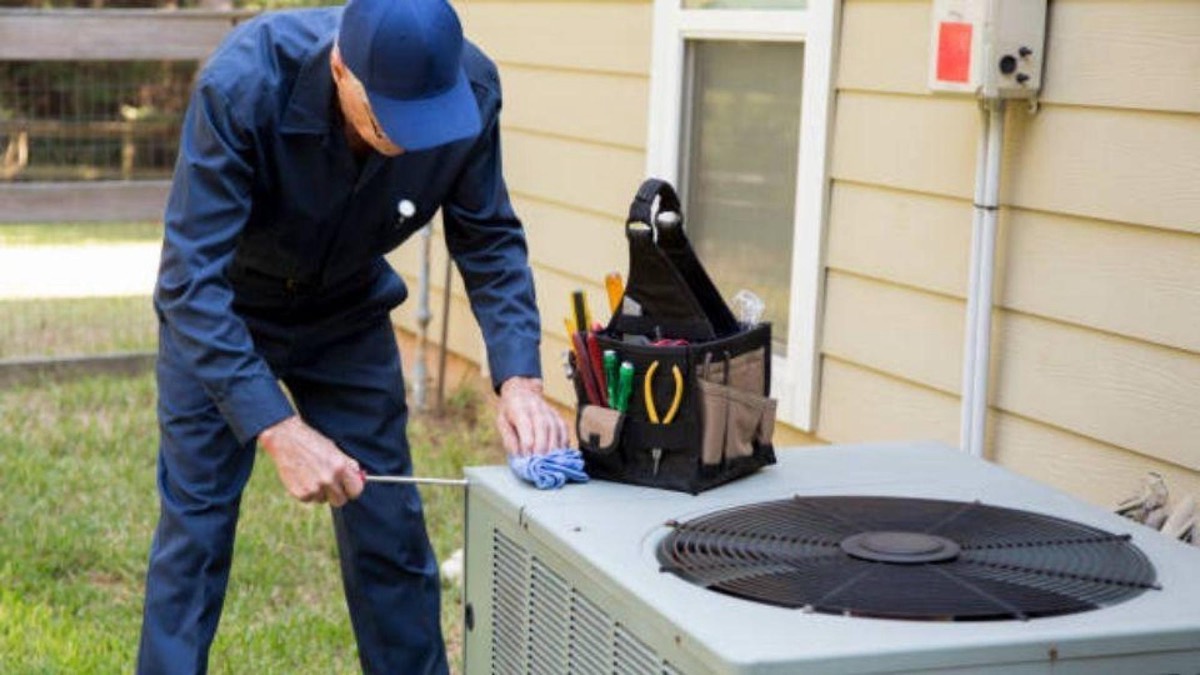
Two noises mean switch it off now
Most air conditioner noises are a repair that can wait until morning. Two are not.
A loud metallic bang or grinding from the outdoor unit. That is usually something loose inside the fan or a compressor in trouble. Every extra minute it runs is doing damage. Switch it off at the thermostat and at the disconnect box on the wall beside the unit.
A scream or a high-pitched shriek. Rare, and it can indicate dangerous pressure in a sealed system. Switch it off and step away from the unit before you call anyone.
Everything below is less urgent. It still means something.
Humming, but nothing is turning
The most common one we get called to. The outdoor unit hums, the fan on top is not spinning, and the house is getting warmer.
That is a failed run capacitor nine times out of ten. The capacitor is the jolt that gets the motor turning; without it the motor sits there drawing current and buzzing. It is a small, cheap part, it is the single most common air conditioning repair there is, and it is a same-day fix — we carry them on the truck.
Do not be tempted to push the fan blade with a stick to start it, an old trick that still circulates. It sometimes works, which is the problem: it confirms the diagnosis while leaving the motor running hard with no capacitor, and that is how a $200 repair becomes a $900 one.
Hissing or bubbling
Hissing is refrigerant escaping under pressure, or a valve struggling. Refrigerant is not consumed — the system is sealed — so if you can hear it leaving, there is a leak. Topping it up without finding that leak sells you the same repair next summer.
Gurgling or bubbling is usually the condensate drain rather than refrigerant, and it often arrives just before a water leak through the ceiling. Worth acting on quickly if the air handler is in your attic.
Clicking, buzzing and rattling
Clicking once at the start and end of a cycle is normal — that is a relay doing its job. Clicking repeatedly without the system starting is a control or a contactor failing to pull in.
Buzzing from a vent rather than the unit is usually loose ductwork or a register vibrating at a particular fan speed. Annoying, cheap, not urgent.
Rattling from outside is often exactly what it sounds like: a loose panel screw, or debris in the fan cage. Worth checking the unit is clear of clippings before assuming the worst.
Squealing is usually a motor bearing or, on older equipment, a belt. It rarely fixes itself and it gets louder.
Loud is not always broken
“My outdoor unit is so loud” is one of the most searched HVAC questions in North Texas, and often nothing is wrong. Older single-stage condensers are simply loud, and they get louder as they age and the mounting pad settles.
What changed is worth more than what it sounds like. A unit that has always been noisy is a comfort question — and a good reason to look at a two-stage or variable-speed system when it is time to replace. A unit that got noticeably louder this month is a repair question.
Tell us which it is when you call. It changes what we bring.
Still stuck?
We are in Celina and we cover Prosper, Frisco, McKinney and the towns between. Diagnostic is $75 and it is waived if you go ahead with the repair. The emergency line is answered 24/7.
Related questions
My AC is humming but not starting. Can I fix it myself?
The part is inexpensive, but a run capacitor holds a dangerous charge even with the power off and has to be discharged before it is touched. This is the one common HVAC part we would genuinely rather you did not attempt. It is a same-day job for us and the $75 diagnostic is waived if you go ahead.
Is a loud air conditioner dangerous?
Usually not, but a sudden change is a signal. Grinding, banging and screaming mean stop the system now. Gradual loudness over years is normally just an ageing single-stage condenser doing what they do.
Why is my AC noisier at night?
Mostly because everything else is quieter. Ambient noise drops after dark and the same condenser sounds twice as loud through a bedroom window. If it is genuinely a different noise rather than a more noticeable one, that is worth a call.
Can I make my outdoor unit quieter?
Sometimes. Clearing debris, tightening panels and levelling the pad all help. Anything beyond that means an acoustic barrier or a quieter unit — modern two-stage and variable-speed condensers are dramatically quieter than a fifteen-year-old single-stage.
