
Why your furnace is not turning on
Five causes, three you can check yourself, and the one that means switch it off.
Written by the team at Panda Heating and Cooling · licensed TDLR TACLA128438C · published 5 September 2026
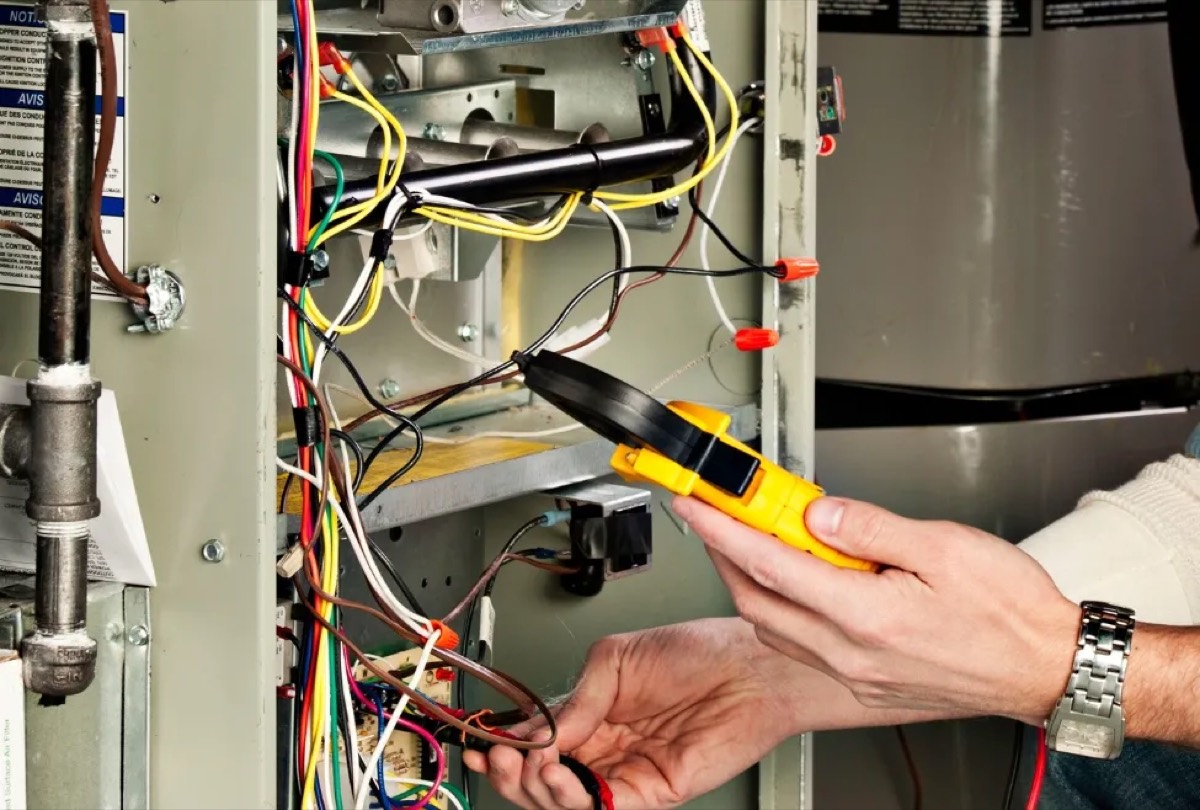
Check these three things before you call anyone
Most no-heat calls in Celina come down to something you can check in ten minutes, and we would rather you found it than paid us to.
1. The thermostat. Set it to Heat, then push the target temperature at least five degrees above the room. A thermostat that only reads a degree or two low will sit there doing nothing and look broken. If the screen is blank, change its batteries — that is the single most common “dead furnace” we get called out to.
2. The furnace switch. There is a light switch on or beside the furnace, usually in the attic or a closet. It looks exactly like a light switch and gets flipped by people fetching Christmas boxes. Check it is on.
3. The filter. Pull it out and hold it to a light. If you cannot see light through it, that is your problem. A blocked filter starves the furnace of air, the heat exchanger overheats, and a safety switch shuts the whole thing down before it can hurt anything. Fit a clean one and give it twenty minutes.
If all three are fine, the next section is where it gets more involved.
It tries to start, then gives up
You hear it click and hum, maybe a whoosh, then silence — and thirty seconds later it tries again. That pattern is a furnace failing its own safety checks, and it is almost always one of two parts. In our own callouts the order is consistent: flame sensor first, igniter second. Between them they account for most of the no-heat calls we run all winter.
A dirty flame sensor. A thin metal rod sits in the flame and tells the control board the gas actually lit. It builds up a film over a season or two, stops sensing properly, and the board shuts the gas off within seconds — exactly as it should. Cleaning it is a ten-minute job and it is the most common furnace repair we do all winter.
A failed igniter. The igniter glows orange to light the gas. They are brittle, they fail on a cold morning after years of thermal cycling, and once they crack the furnace goes through its whole sequence and then stops. It is a part, not a system failure.
Both are ordinary repairs. Neither means you need a new furnace, whatever anyone tells you at the door.
The blower runs but the air is cold
Confusingly, this is often not a furnace fault at all.
If your thermostat fan setting is on On rather than Auto, the blower runs continuously whether or not the burners are lit. Between heating cycles you get room-temperature air out of the vents, which feels cold. Switch it to Auto.
If it is already on Auto and the air is still cold, the furnace is either not lighting at all — see the section above — or it is lighting and shutting down on a safety before it warms up. Both need looking at.
When to stop and switch it off
Three things mean stop reading and act.
Your carbon monoxide alarm is sounding. Get everyone outside, then call the gas company or 911. Not us first — them.
You smell gas. Do not touch light switches or the thermostat. Leave the house and call the gas company from outside.
The flame is yellow and lazy rather than crisp and blue, or there is soot around the furnace. Switch the furnace off at that light switch and call us. That can indicate incomplete combustion, and a cracked heat exchanger is the one furnace fault that is genuinely dangerous rather than merely inconvenient.
A cracked heat exchanger is not repairable. The exchanger or the furnace has to be replaced, and anyone offering to patch one should not be in your house. We verify with a visual inspection and a combustion analyzer before making that call, and we show you what we found.
What it usually costs
A diagnostic visit is $75, and it is waived entirely if you go ahead with the repair. A flame sensor clean or an igniter replacement is a same-day job; we carry both on the truck through the winter for exactly this reason.
If it does turn out to be a heat exchanger on a fifteen-year-old furnace, we will show you the repair-versus-replace math with the actual numbers rather than steering you. Replacement runs $7,000 to $15,000 for a complete system, and there is 0% financing over 60 months if that helps.
Still stuck?
We are in Celina and we cover Prosper, Frisco, McKinney and the towns between. Diagnostic is $75 and it is waived if you go ahead with the repair. The emergency line is answered 24/7.
Related questions
Why does my furnace turn on and then shut off after a few minutes?
That is short-cycling, and the usual cause is restricted airflow — a blocked filter or closed vents making the heat exchanger overheat, so a safety switch cuts it out. Change the filter and open every vent first. If it continues, the limit switch or the flame sensor needs looking at.
Should I keep resetting the furnace?
Once, to clear a one-off fault. Not repeatedly. A furnace that keeps shutting itself down is doing its job — something is wrong and the safeties are catching it. Resetting past a safety over and over is how a small repair becomes a big one.
How often should a furnace be serviced?
Once a year, before heating season. It is not just upselling: most manufacturer warranties require documented annual maintenance, and a denied compressor or heat exchanger claim is a four-figure conversation. A tune-up is $99, or it is included in the Comfort Club at $150 a year.
My furnace is 18 years old. Repair or replace?
Ask what the repair costs against the age. Under ten years old with a cheap part failure, repair every time. Over fifteen with a major component gone, the money usually goes further in a new system — and at that age you are also paying to run something significantly less efficient. We will show you both numbers rather than telling you the answer.
