
Why your upstairs will not cool but downstairs is fine
A two-story North Texas classic. Four causes, and only one of them is the AC.
Written by the team at Panda Heating and Cooling · licensed TDLR TACLA128438C · published 5 September 2026
It is usually not the air conditioner
This is one of the most common calls we get in Celina and Prosper, and in most cases the equipment is working exactly as designed. The problem is physics and ductwork.
Heat rises. A two-story house gains heat upstairs through the roof all afternoon while downstairs is shaded by the floor above it. Then the thermostat — almost always downstairs — sees a comfortable temperature and shuts the system off while the bedrooms are still 8 degrees warmer.
The system did what it was told. It was told the wrong thing.
The four causes, cheapest first
1. Thermostat placement. One thermostat downstairs controlling both floors will always favor downstairs. Nothing is broken; the house has one vote and it is cast on the ground floor.
2. Balancing. Most systems have dampers in the ductwork that can shift air upstairs. Many were never adjusted after installation, or were set for winter and never changed back. This is often an afternoon of work and no parts.
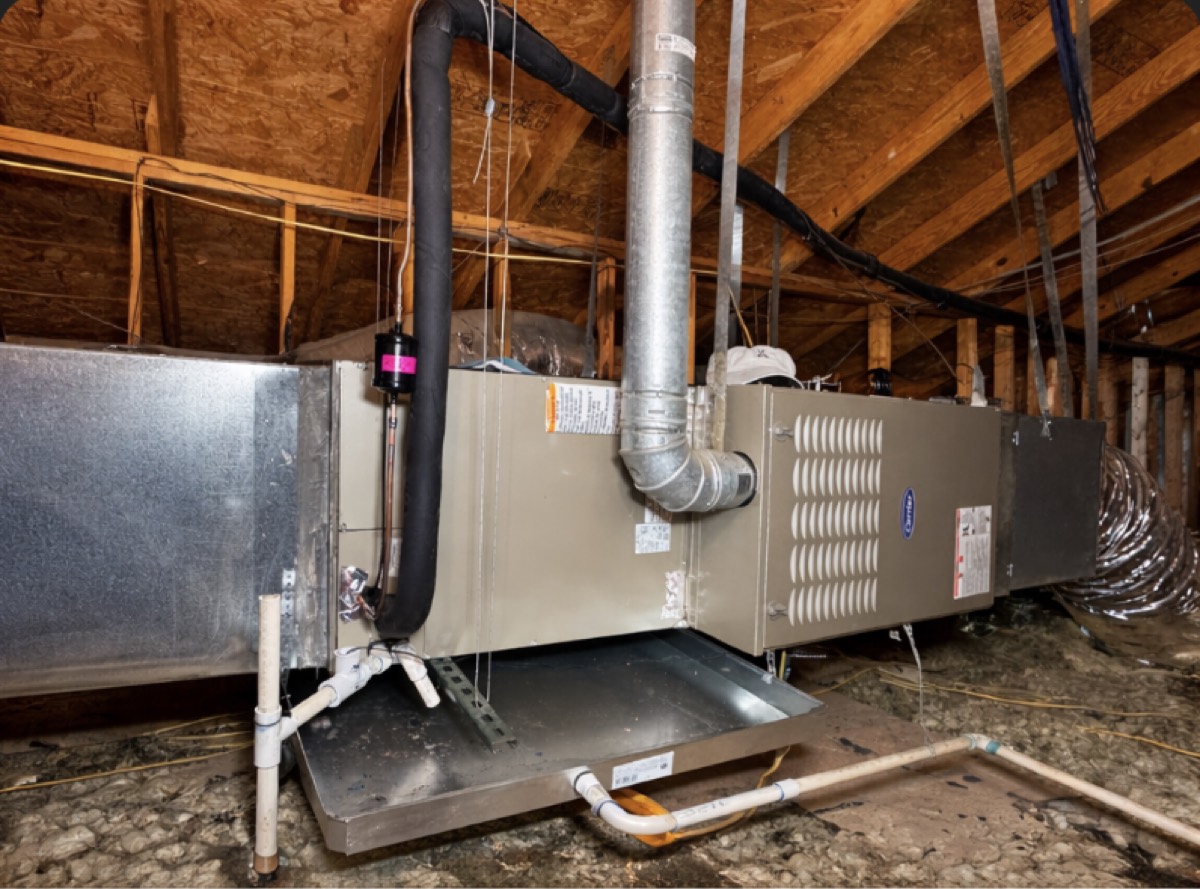
3. Ductwork. Upstairs runs are longer, and in North Texas they run through an attic that hits 140°F. Flexible duct that is kinked, crushed, undersized or badly insulated loses a large share of its cooling before it reaches the room. We see ducts pinched behind stored boxes more often than you would think.
4. Capacity or design. One system asked to serve two floors, or a system that was undersized to begin with. This is the expensive answer and we do not reach for it first.
What you can try this week
Close downstairs vents part-way — not fully. Partly closing some ground-floor registers pushes more air upstairs. Never close them completely: that restricts total airflow and can freeze the coil, which turns a comfort problem into a repair.
Run the fan on On rather than Auto. Continuous circulation mixes air between floors and evens out the difference. It costs a little more in electricity and it genuinely helps in a two-story house.
Close blinds on west-facing upstairs windows. Unglamorous, and the afternoon sun through a bedroom window is a real load your system is fighting.
Check the attic access hatch is sealed. An unsealed hatch is a hole between your bedroom and a 140-degree attic.
What actually fixes it
In rough order of cost:
- Damper balancing. Adjusting what is already there. Often the whole answer.
- Duct repair. Replacing crushed or undersized runs, sealing leaks, adding insulation on attic runs. Real work, real difference.
- Adding a return upstairs. Many two-story homes are short of return air upstairs, which limits how much conditioned air can get there in the first place.
- Zoning. Motorised dampers and a second thermostat, so each floor gets what it asks for. The proper fix for a one-system two-story house.
- A second system. What most newer homes in Prosper and Celina have from the start.
We start at the top of that list, not the bottom. A diagnostic is $75 and we would rather sell you a morning of damper balancing than a system you did not need.
Still stuck?
We are in Celina and we cover Prosper, Frisco, McKinney and the towns between. Diagnostic is $75 and it is waived if you go ahead with the repair. The emergency line is answered 24/7.
Related questions
Should I close vents in rooms I do not use?
Partly, at most. Fully closing vents raises static pressure across the whole system, which reduces airflow, can freeze the coil and makes the blower work harder. It feels like it should save money and it usually costs more.
Is it normal for upstairs to be warmer than downstairs?
A few degrees, yes, especially mid-afternoon. Eight or ten degrees is not normal and is worth investigating. If it has always been that way it is a design or ductwork issue; if it started this year, something changed.
Would a bigger AC fix my upstairs?
Usually not, and it often makes things worse. An oversized system cools the air fast, shuts off before it has removed humidity, and runs short cycles that never move enough air upstairs. If air cannot get up there, more capacity does not help.
How much does zoning cost?
It depends entirely on the ductwork you already have, so we will not put a number on it without looking. It is worth quoting alongside a second system, because in some houses the two costs are closer than people expect.
